Fixer, line producer or production manager in Morocco: which one do you actually need?
ByAymen El Hayani— Fixer & production manager, Rabat
4 min readProduction · International · Guide
Have a project in mind? Quote within 24 hours. Message us on WhatsApp · Call 06 63 66 27 95
Every week a producer abroad writes to a Moroccan company asking for "a fixer", and what they describe needing is a production manager. Or they ask for a "service company" for a two-day branded-content shoot that a fixer and a small crew would handle at half the cost. The words matter because they decide who is accountable for what. Here is how the roles actually divide on the ground in Morocco.
The fixer
The fixer is the local connector. They know which rental house really has the lens, which café will let you light it at dawn, who at the prefecture handles your file, which driver turns up, and what the crowd permit needs that the form does not say. They find crew, locations and equipment, open doors, translate — on set and in meetings — and solve the problem nobody planned for.
What a fixer does not usually own: your budget, your schedule, or the legal responsibility for the production. They are paid per day or per job, and they work under someone who does own those things.
You need a fixer when you are bringing your own producer and heads of department, you know what you want to shoot, and you need the country to work for you. Documentary units, news, small commercials, editorial shoots.
The production manager
The production manager runs the day. Call sheets, crew contracts and payroll, equipment orders and returns, transport, accommodation, catering, insurance, the daily cash, and the hundred decisions that keep a schedule honest. On a foreign production in Morocco the production manager is usually local, because the suppliers, the prices and the paperwork are.
You need a production manager when there is more than one unit, more than a handful of crew, more than one location per day, or more than a week of shooting. At that size, "the fixer will handle it" stops being a plan.
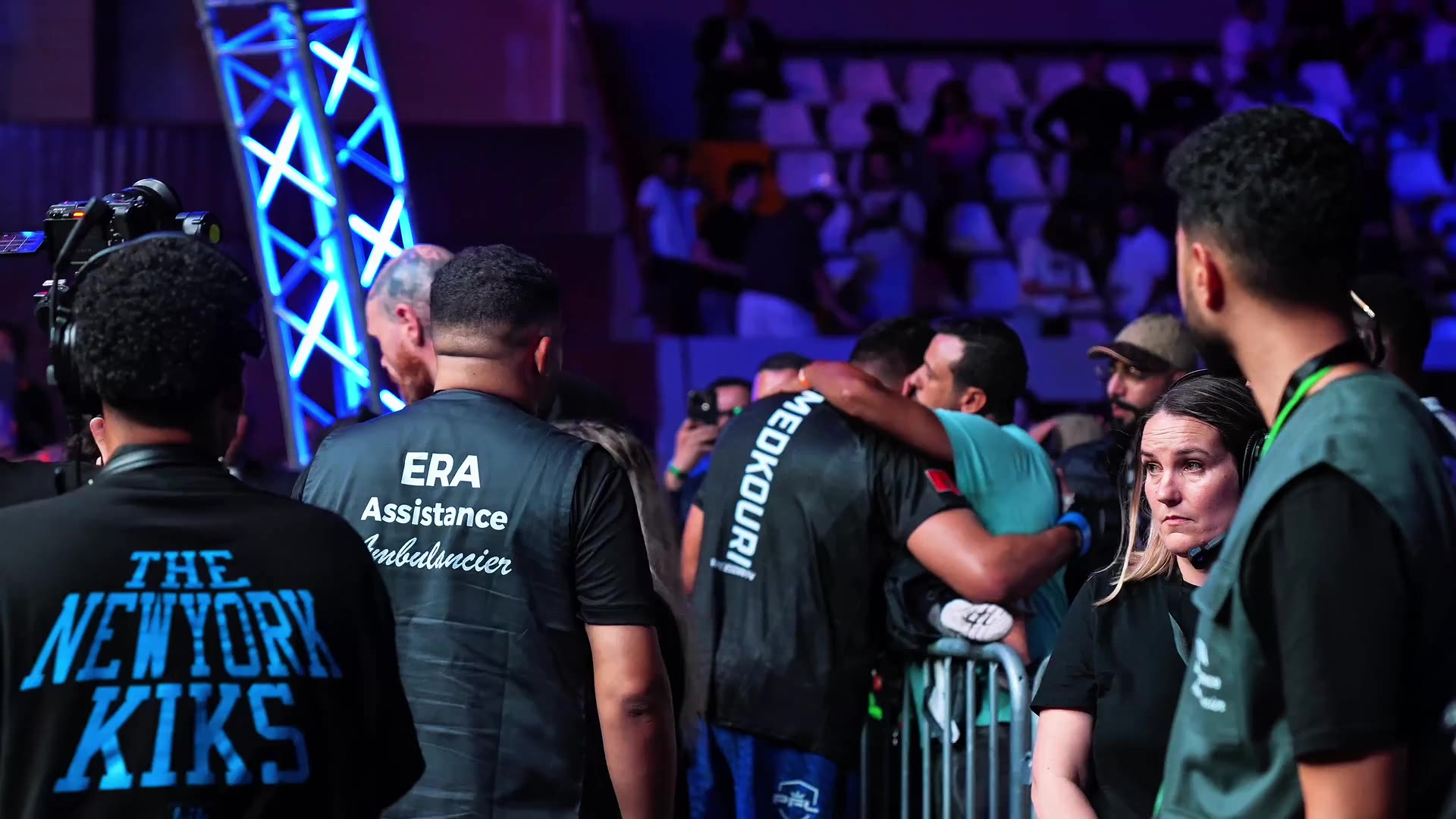
For PFL Africa Casablanca we were the production manager: a crew of more than 36 people hired, contracted and run, with the catering, transport and permits for a full fight week. The project shows what that produced.
The line producer
The line producer owns the budget and the schedule for the whole production and is accountable for delivering on both. They build the estimate, negotiate the big contracts, decide what the money buys, and report to the executive producer or the client. On a Moroccan shoot the line producer may be yours (flying in) with a local production manager under them, or local, if the production is being delivered as a service.
You need a line producer when the budget is large enough that someone has to be answerable for it as a whole — a feature, a series, a multi-day commercial with talent and set builds.
The service company
A service company is a registered Moroccan production company that takes the whole production as a contract: it applies for the CCM approval in its own name, employs the crew, rents the equipment, carries the insurance, and — where the production qualifies — is the vehicle for the cash-rebate scheme. The foreign production pays one invoice and gets one accountable partner.
You need a service company when the law or the money says so: features, series, large commercials, anything claiming the rebate.
The honest recommendation
For most foreign productions that come to Morocco — commercials, branded content, documentaries, sports and events, music videos — the best structure is one company that holds the fixer's contacts, the production manager's discipline and the studio's cameras, with a line producer on your side if the budget warrants it.
The reason is not convenience. It is that information does not get lost between hands. The person who negotiated the venue is the one who knows where the fourth camera may stand. The person who filed the drone permit is the one flying it. When something is missing at six in the evening, it is on set by call time, because the people solving it are the people who will shoot with it.
That is what we did for PFL Africa, and what we offer to any production landing in Morocco: production services, fixing, crew, equipment and permits, under one contract.
Coming to Morocco with a shoot or an event? Tell us the dates and the scope — you get a realistic budget and a permit timeline within 24 hours, and a straight answer about which of these roles you actually need.
Frequently asked questions
- What is the difference between a fixer and a line producer?
- A fixer is the local connector: contacts, locations, permits, problem-solving on the ground, usually paid per day. A line producer owns the budget and the schedule for the whole production and is accountable for delivering it on both. On a small shoot one person does both; on a large one they are different people.
- Do I need a service company to film in Morocco?
- For a feature, a series or a large commercial, yes: the CCM approval is applied for through a Moroccan production company, and the rebate scheme requires one. For a small documentary or branded-content unit, a fixer who works under a registered studio covers the same ground with less overhead.
- How much does a fixer cost in Morocco?
- Fixers are quoted per day or as a package for the job, with crew, equipment and logistics itemised separately. Ask for the quote in dirhams with everything on it; a low day rate with the logistics left out is not a low price.
- Can one company do all of it?
- Yes, and for most foreign productions it is the better structure. AYMEN PRODUCTION was fixer, production manager and studio for PFL Africa Casablanca: 36+ crew, permits, logistics, the films and four days of live, under one contract.